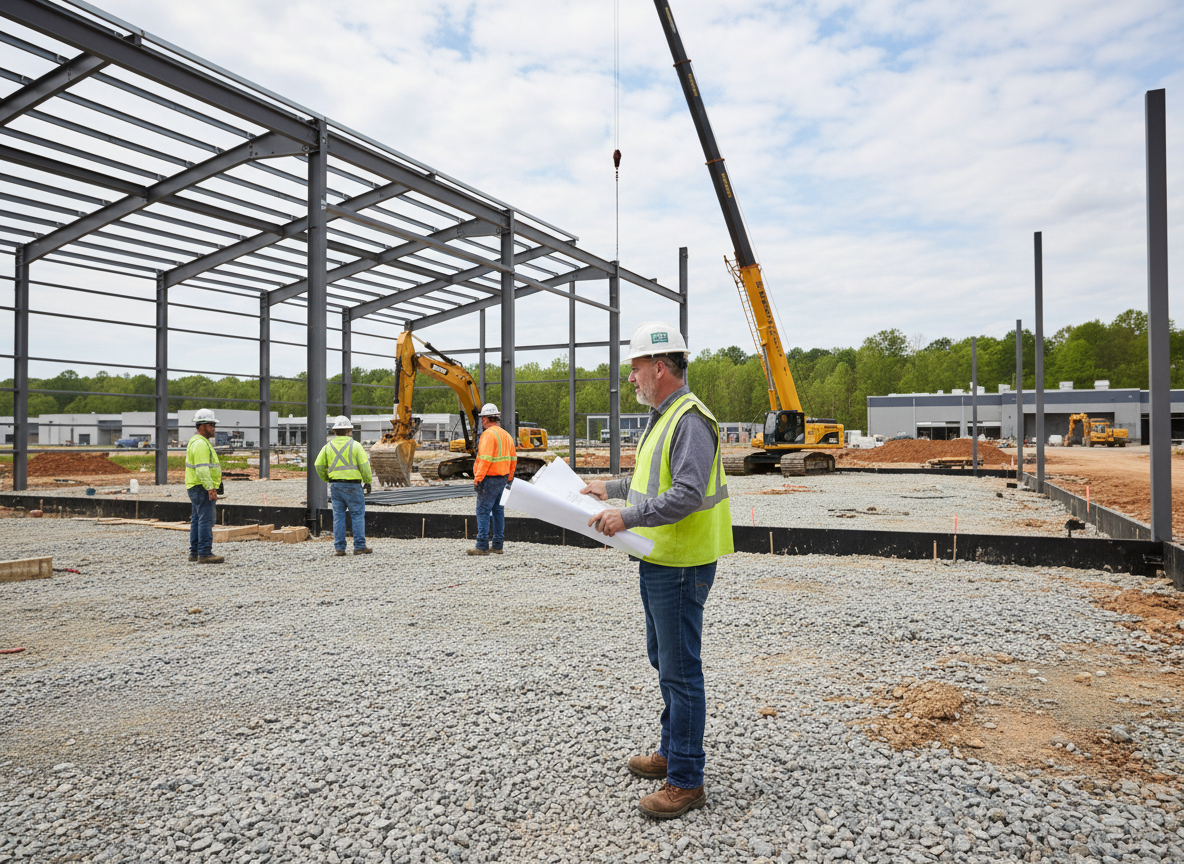
Industrial projects in Murphy face constant pressure from hot humid summers that accelerate corrosion on metal framing and HVAC systems. We specify galvanized and stainless components rated for Collin County moisture levels, especially on structures near Breckinridge Park where drainage patterns concentrate runoff. Severe spring storms bring high winds and hail that have repeatedly damaged warehouse roofs in The Pavilions; our detailing includes impact-rated panels and reinforced ridge vents to reduce future claims.
Soil movement in Rolling Ridge and older industrial pockets near Plano Road requires deeper footings and engineered fill before slab placement. We coordinate with Collin County inspectors on every pour because clay expansion during mild winters can shift equipment pads within the first two seasons. When clients request expansions near Murphy Central Park, we also manage traffic control and dust suppression to keep public access open during phased construction.
Many Murphy industrial sites sit on lots originally developed for light manufacturing in the 1990s. Retrofitting these buildings for modern loads means verifying existing rebar placement with ground-penetrating radar before adding mezzanines or crane rails. We avoid the common shortcut of bolting new steel to untested walls because summer humidity combined with winter temperature swings creates hidden rust that fails under dynamic loads.
Coordination with nearby cities matters when utilities cross city limits. Work that touches Richardson or Wylie infrastructure requires separate permits and inspection schedules. We maintain 24/7 availability at 115 W Farm To Market 544 so emergency shutdowns or storm repairs can start the same night without waiting for normal business hours.
Technician insight
In Murphy, the thing that catches most people out with Industrial general contractor work is how quickly summer humidity rusts untreated steel once the building envelope is opened for an addition. The clay in Rolling Ridge and The Pavilions moves enough in mild winters that we always recheck level after the first freeze-thaw cycle, and skipping that step is what turns a straightforward expansion into a rework.
Storm Damage Repair at The Pavilions
High winds tore roof panels on an industrial building near The Pavilions. We found water intrusion had already reached interior electrical runs because original flashing lacked hurricane clips. We replaced the roof assembly with impact-rated panels, added sealed ridge vents, and re-ran conduit above the new insulation line. The facility returned to full operation before the next humidity spike.
How it works
- 1
Site Assessment
We walk the property with the owner, note drainage, soil conditions, and existing structure age, then flag any Collin County code items that affect the scope.
- 2
Scope and Permitting
Detailed drawings and material specs are prepared; permits are pulled for Murphy and any adjacent jurisdictions such as Plano or Wylie before mobilization.
- 3
Construction Execution
Work proceeds with daily moisture and wind monitoring, using humidity-rated sealants and storm-rated fasteners throughout the build.
- 4
Final Inspection and Turnover
All systems are tested under load, punch list items cleared, and as-built drawings delivered with maintenance guidance for local weather exposure.
Pricing
Pricing is provided after site visit because industrial scope varies widely with soil conditions, storm hardening requirements, and utility coordination across city lines.